
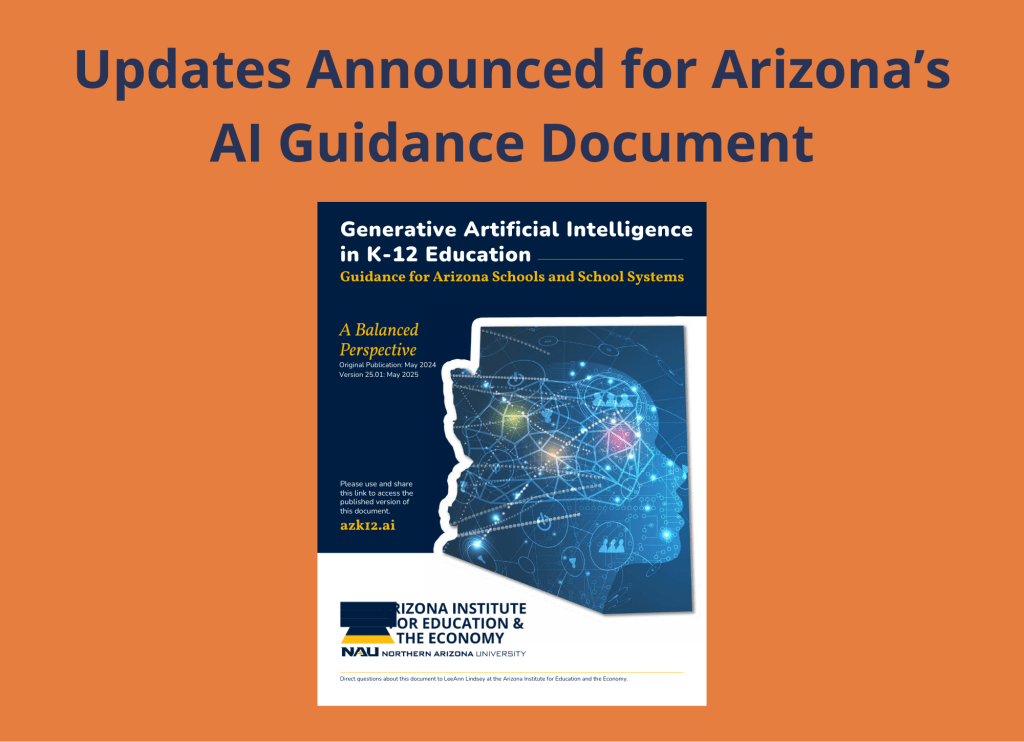
As artificial intelligence continues to reshape education, Arizona remains a national leader in crafting responsible, forward-thinking guidance for schools. In May 2025, the Arizona Institute for Education and the Economy released an updated version of its Generative AI in K–12 Education Guidance (v25.01). This revision builds on the balanced framework introduced in 2024 but includes critical enhancements every district leader, tech coach, and classroom teacher should understand.
Whether you’re launching your first AI literacy initiative or refining existing practices, here are the top three updates in Arizona’s 2025 GenAI Guidance you need to know.
1. Expanded Guidance on Intellectual Property
One of the most important additions is a clearer stance on intellectual property related to AI-generated content. As educators and students increasingly collaborate with GenAI tools like ChatGPT, understanding ownership and ethical usage becomes essential.
The updated guidance addresses questions such as:
- Who owns AI-generated content?
- How should schools handle attribution when AI tools are used in lesson planning or student projects?
- What legal considerations must be in place when sharing AI-assisted materials?
The document encourages schools to proactively educate staff and students about copyright, usage rights, and the importance of transparency. As more learning products are co-created with GenAI, these legal and ethical guardrails are no longer optional—they’re critical for protecting both individual and institutional integrity.
2. Deeper Focus on AI Literacy with Practical Tools
The updated version introduces an expanded definition of AI literacy and provides richer resources to support its development. While earlier versions emphasized why AI literacy is important, v25.01 goes a step further by focusing on how to teach it effectively.
Key updates include:
- A deeper integration of AI literacy with Arizona Academic Standards, especially in digital citizenship, computational thinking, and source evaluation.
- Introduction of the AI Use Scale, a practical tool to help educators and students assess and reflect on their AI use in learning tasks.
- A push for cross-curricular integration, helping teachers embed AI ethics and reasoning into real-world assignments, not just tech classes.
This shift signals that teaching AI literacy in schools is foundational to preparing students for a rapidly evolving digital world.
3. Updated Use Guidelines to Promote Responsible AI Adoption
Arizona’s GenAI Guidance continues to encourage schools to embrace AI, but with even greater emphasis on responsible implementation by:
- Promoting thoughtful integration by shifting the focus from compliance to intentional teaching of AI norms.
- Recommending a cautious approach to the use of AI detectors, which often generates false positives and can unfairly target multilingual students.
- Encouraging educators to prioritize human oversight, transparency, and open dialogue over surveillance.
This update also recommends replacing punitive policies with frameworks that foster trust, communication, and student agency.
Final Thoughts
As AI technology evolves, so must our approach to integrating it into teaching, learning, and school operations. These top three updates centered on intellectual property, AI literacy in schools, and responsible use guidelines signals a strong commitment to equity, clarity, and innovation.
Whether you’re a superintendent drafting district policy or a teacher redesigning your assessments, now is the time to align with the latest guidance and ensures ethical and responsible AI use in education.
 Skill Surge Consulting